
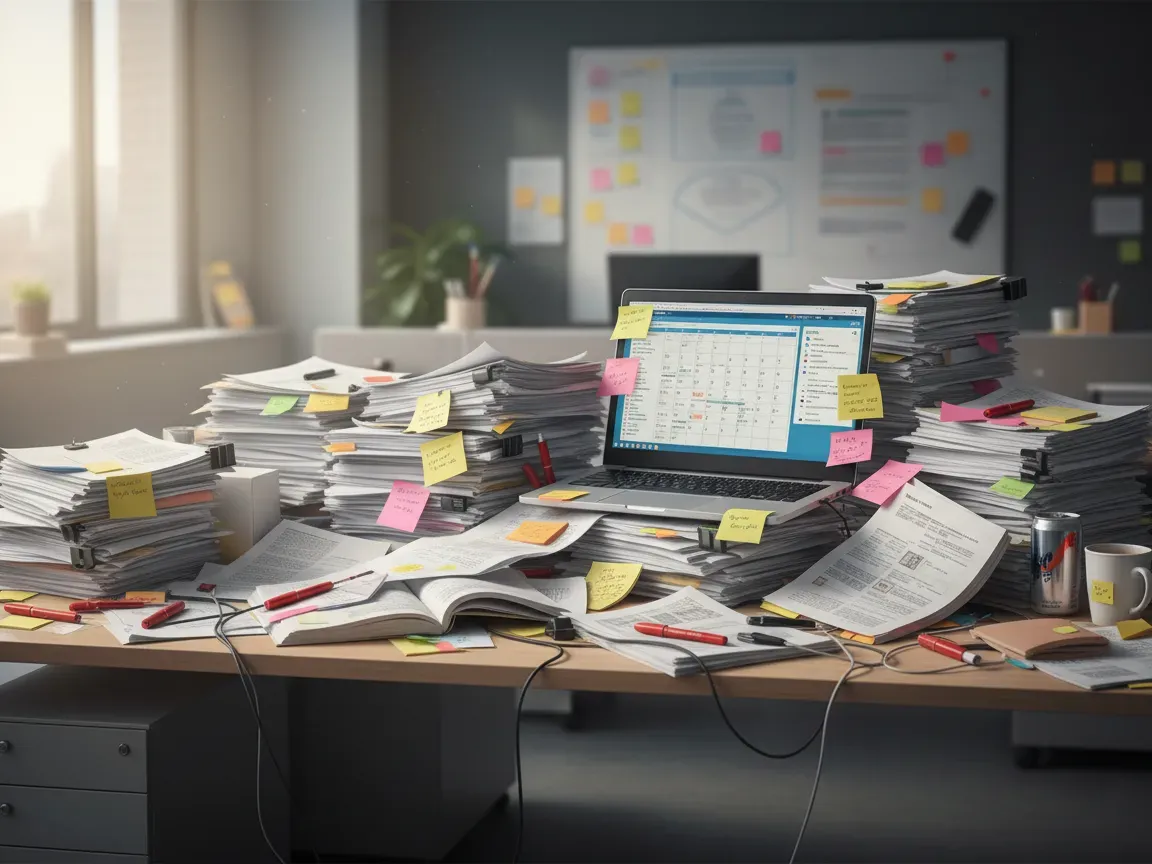
Generating a wall of text with artificial intelligence takes seconds, but making sense of it still takes human focus. When professionals generate unvetted documents and immediately pass them down the line, they do not save organizational time. They simply outsource the burden of editing, fact-checking, and critical thinking to their teammates.
Shopify CEO Tobi Lutke recently brought attention to this workplace friction, labeling raw, low-effort outputs as AI slop grenades. The phrase highlights a growing operational breakdown across digital teams. Employees use generative models to clear their own to-do lists rapidly, yet the resulting output creates a massive productivity sink for everyone else who has to read, fix, or implement the material.
What Are AI Slop Grenades in Modern Workplaces?
An AI slop grenade is an unedited, verbose draft created by an artificial intelligence prompt and forwarded directly to colleagues without basic quality control. It looks finished on the surface because large language models excel at professional tone, formatting, and grammar. Beneath that polish, however, these texts often lack clear decision-making, context, and accurate data.
Instead of solving an actual problem, the sender tosses an explosive mess of superficial paragraphs into another person’s inbox or project management board. The sender checks off a task, while the recipient inherits the tedious job of finding hallucinations, eliminating filler, and figuring out what the document is actually trying to say.
The Hidden Cost of Passing Unchecked AI Drafts to Coworkers
The primary cost of unchecked automation is an invisible transfer of labor. When a worker skips the step of refining an automated draft, the time saved by that single contributor does not simply disappear into pure profit. It transforms into an intellectual tax on coworkers.
This shift undermines team collaboration in several distinct ways:
- Cognitive overload increases when team members must parse lengthy, machine-generated text to extract a few basic facts.
- Context collapse happens because generic tools cannot understand nuanced internal politics, client history, or project constraints.
- Fact-checking fatigue sets in as reviewers discover subtle errors or fabricated numbers mixed into otherwise plausible sentences.
- Communication velocity slows down, forcing extra meetings and review cycles just to clarify basic intentions.
When this habit spreads across an organization, internal communication becomes cluttered with polite noise. Total productivity plummets because teams spend more energy filtering automated output than executing core strategy.
Rising Market Demand for Professional AI Cleanup
The corporate consequence of widespread slop is already visible in the broader marketplace. Freelancers, agencies, and internal specialists are seeing a surge in demand for dedicated cleanup work. Companies now hire human copywriters, technical editors, and subject matter experts specifically to audit and rewrite internal materials generated by automated software.
This trend exposes the core flaw of measuring productivity solely by volume or speed. Generating ten pages of speculative text in two minutes offers zero value if an editor needs three hours to verify the citations, fix the structure, and align the tone with company standards. The sudden rise of specialized cleanup roles proves that unchecked generation is an operational bottleneck, not an efficiency upgrade.
Core Principles for Responsible Internal AI Usage
Organizations do not need to ban machine intelligence to protect their workflows. Instead, leadership must establish strict standards for internal handoffs so that digital assistants support the pipeline instead of derailing it.
- Maintain personal ownership by holding the prompter entirely accountable for every fact, number, and conclusion in their submission.
- Enforce mandatory human passes so no draft moves to another department without direct editing and trimming.
- Optimize for brevity rather than length, encouraging contributors to strip out machine fluff before sharing documents.
- Require clear contextual grounding by training employees to feed verified source material into prompts rather than asking models to speculate.
How Teams Can Maximize AI Gains Without Sacrificing Quality?
Extracting real value from generative software requires using it as an accelerator for critical thought, not as a replacement for personal judgment. Teams that succeed treat automation like an eager research assistant whose notes always require rigorous evaluation.
The most effective workflow begins with structured planning. Team members should write their own outlines, define the logical flow, and direct the software to handle narrow, focused tasks such as summarizing raw data sets, drafting basic templates, or restructuring existing thoughts.
Once the machine provides a response, the human operator must verify every claim against primary sources. When workers prune repetitive phrasing and ensure every sentence serves a distinct strategic purpose, they hand off sharp, actionable materials instead of chaotic drafts.
Protecting Shared Time in an Automated Workplace
Sustainable operational speed comes from clarity, not raw volume. If an automated process makes one person faster while slowing down five colleagues, it represents an organizational failure. True efficiency protects the collective attention of the team so high-impact decisions can happen without unnecessary friction.
Every professional who touches an artificial intelligence tool holds direct responsibility for the final artifact. Taking ten minutes to clean, verify, and condense a computer-generated memo before hitting send shows respect for your colleagues. By treating automation as a private drafting tool rather than an excuse to offload basic thinking, organizations preserve their shared focus and produce work that actually moves the business forward.