
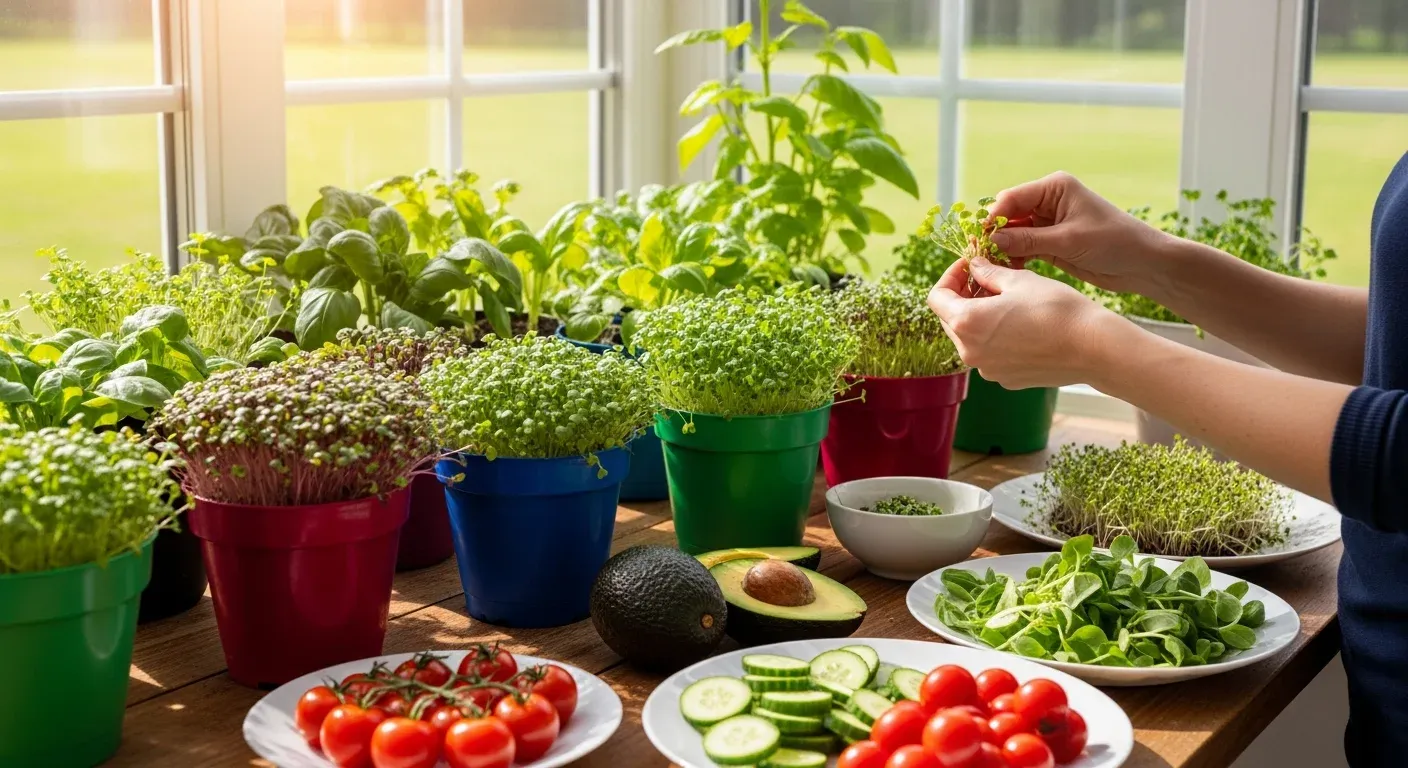
If you love the taste of fresh, vibrant greens and want to bring a bit of garden magic into your kitchen, microgreens are the perfect solution. With just a little space and a handful of supplies, you can grow nutrient-packed greens indoors—no matter the season or your gardening experience. An indoor microgreens garden lets you harvest crisp, flavorful greens for salads and garnishes any day of the year. Here’s how to get started and savor the difference in every bite.
Tiny Greens, Big Benefits: Why Microgreens Are Worth Growing
Packed With Nutrients
Microgreens deliver a concentrated dose of vitamins, minerals, and antioxidants, often far surpassing their mature plant counterparts. Just a sprinkle on your salad can boost your intake of vitamin C, E, K, beta-carotene, and essential phytonutrients. Studies show these young seedlings can be up to 40 times more nutrient-rich than fully grown greens—a small addition with a big impact on your daily nutrition.
Always Fresh, Always Convenient
Nothing beats the taste and texture of greens snipped moments before eating. Growing microgreens indoors means you’ll always have the freshest, most flavorful greens at your fingertips—no more relying on limp supermarket lettuce. You’ll save trips to the store, reduce waste, and always know exactly how your greens were grown.
Harvests in Every Season
With indoor microgreens, weather is no obstacle—rain, snow, or blazing heat can’t stop your weekly harvests. By growing inside, you control the environment, ensuring steady, reliable crops even in the heart of winter. It’s an easy way to keep your salads lively and seasonal all year round.
Which Microgreens Should You Grow? Exploring Tastes and Varieties
Top Picks for Beginners and Foodies
If you’re new to microgreens, start with varieties that are fast-growing and flavorful. Consider these favorites for your first trays:
- Radish: Quick to sprout with a peppery bite.
- Sunflower: Crunchy and nutty, great for texture.
- Pea Shoots: Sweet, tender, and a salad staple.
- Broccoli: Mild flavor and packed with nutrients.
- Mustard: Brings a spicy zing, perfect for bold dishes.
Harvest Times and Flavors
Radish and broccoli microgreens are ready to harvest in just 7–10 days, making them ideal for impatient gardeners. Sunflower and pea shoots take a bit longer—about 10–14 days—but reward you with bigger, heartier leaves. Mixing several types in one tray adds both variety and visual appeal to your salads.
Seed Quality Matters
For the healthiest microgreens, always choose high-quality, untreated seeds labeled specifically for microgreens. Avoid seeds treated with chemicals or pesticides. Opting for organic seeds helps ensure that your greens are as pure and safe as possible.
Setting Up Your Indoor Microgreens Space: What You’ll Need
Essential Tools and Materials
Starting your microgreens garden is refreshingly straightforward. You’ll want:
- Shallow trays (with or without drainage)
- A growing medium, such as coconut coir, seed-starting mix, or hemp mats
- A spray bottle for gentle watering
- High-quality seeds
- LED grow lights (especially helpful if you don’t have a sunny windowsill)
- Clear covers (optional, for humidity during germination)
Creating the Perfect Growing Conditions
Microgreens thrive in bright, indirect light for 12–16 hours a day, making them a great fit for a sunny windowsill or under full-spectrum LED lights. Keep the temperature between 18–24°C (65–75°F) and maintain moderate humidity to prevent wilting or mold. Good air circulation—like a small fan nearby—helps keep your greens healthy and robust.
Making the Most of Small Spaces
Even if you’re short on space, microgreens fit beautifully on windowsills, countertops, or shelves. Stack trays vertically or use compact racks to maximize your harvest in even the tiniest kitchen.
Step-by-Step: Planting and Caring for Your Microgreens
How to Sow and Grow
- Fill your tray with 2–3 cm (about 1 inch) of moistened growing medium.
- Scatter seeds densely and evenly across the surface.
- Mist the seeds lightly with water and cover the tray with a clear lid or plastic wrap to keep in moisture.
- Once seeds sprout—usually in 2–4 days—remove the cover and move the tray into bright light.
Watering and Light Tips
Keep the growing medium consistently moist but never soggy, using a spray bottle to avoid disturbing delicate roots. Place trays where they’ll get plenty of light, whether from a window or a grow lamp, to encourage strong, flavorful growth.
Keeping Problems at Bay
- Wash trays and tools before each planting to prevent disease.
- Avoid overwatering, as too much moisture can cause mold.
- Use a fan or open window for airflow if needed.
- Check your trays daily and remove any seedlings that look unhealthy.
Harvesting Microgreens and Bringing Them to Your Table
The Best Time and Way to Harvest
Microgreens are ready to harvest when they have two fully developed seed leaves (cotyledons) and sometimes the first set of true leaves—usually within 7–14 days. Use clean scissors to snip the greens just above the soil line for the freshest results.
Keeping Your Greens Fresh
Harvest microgreens right before you plan to eat them for maximum flavor and nutrition. If you need to store them, wrap gently in a paper towel, place in an airtight container, and refrigerate. They’ll stay crisp for up to a week.
Fresh Salad Inspiration
Microgreens add color, crunch, and bold flavor to salads and so much more. Try these tasty combinations:
- Toss radish, sunflower, and pea shoots with a light vinaigrette for a classic green salad.
- Add spicy mustard microgreens atop hummus, roasted veggies, and olives for a Mediterranean bowl.
- Use broccoli microgreens as a gourmet garnish on avocado toast or scrambled eggs.
- Mix pea shoots and cilantro microgreens into rice noodle salads for a fresh, Asian-inspired crunch.
Whether you’re a dedicated home cook, a health enthusiast, or simply want to bring more green into your daily routine, growing microgreens indoors is a simple way to enjoy ultra-fresh, nutrient-rich greens every day. With a little care and creativity, your kitchen can become a source of year-round harvests—brightening your salads and elevating every meal. Start your microgreens adventure now and taste the garden-fresh difference in every bite.